Hat's Off: The Pointy-Headed Residents Quietly Running Britain's Front Gardens
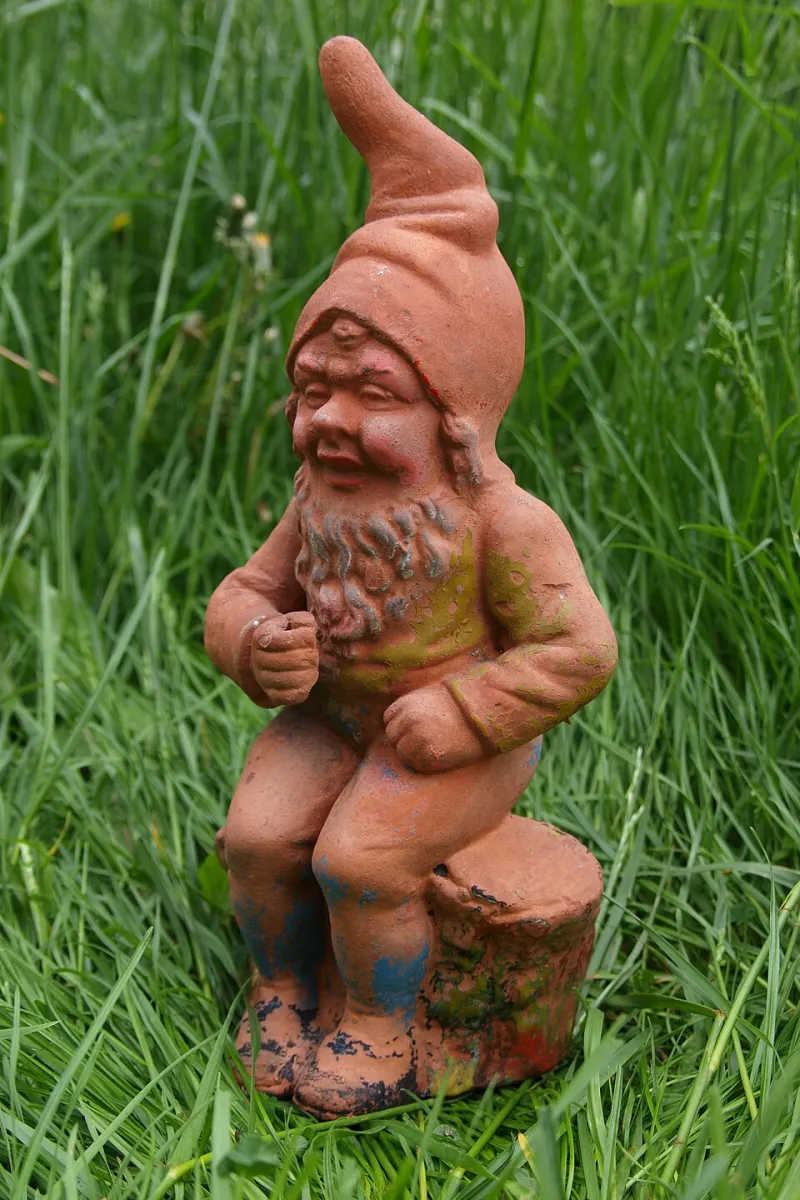
Photo: Photographed by User:Bullenwächter, CC BY-SA 3.0, via Wikimedia Commons
Every front garden has a casting director. Some choose lavender and a nice bit of slate. Others choose a bloke in a red hat holding a fishing rod, a second bloke in a hi-vis vest, and a third who appears to have been weathered into a small, pointy-headed philosopher. We are not here to judge. We are here to photograph the ensemble.
Britain's garden gnomes are often dismissed as tat, which is unfair. Tat implies a lack of ambition. What we have here is accidental street theatre: a tiny resident population arranged by the path, quietly auditioning for the role of 'someone lives here and they are funnier than their net curtains suggest'. This is a photo tour of the little painted citizens who ask nothing of us except a low angle and a bit of respect.
The Fishing Gnome: A Study in Patience (and Puddles)
Start in the suburbs, where the cul-de-sac pond is less a body of water and more a hopeful puddle with a liner. Beside it sits the fishing gnome: rod out, bucket at his feet, expression set to 'I have been here since 1998 and the fish are playing hard to get'. He is not fishing. He is performing patience.
Photographically, this is a gift. Get down to his eye level and let the real pond, however small, sit behind him. Include the wonky bamboo cane or the half-buried frog ornament. The joke is in the scale. A gnome fishing in a puddle is Britain in one frame: enormous optimism, modest infrastructure.
Hi-Vis Heroes and Other Civic-Minded Small Persons
Then there are the gnomes who have taken on public duties. You will find them at driveway junctions, allotment gates and the edges of front lawns, wearing hi-vis jackets, hard hats or a small sign that says 'SLOW'. They are traffic management for wheelie bins. They are also a clue that the household has a sense of humour and a drawer full of miniature accessories.
Look for the ones holding stop signs or clutching a tiny clipboard. Some have been dressed for Christmas, then forgotten until March, so they stand among the daffodils in a Santa hat like a very small area manager who has lost track of the calendar. Shoot them square-on, include the real street behind, and let the absurdity do the work.
The Weathered Elders: When Paint Leaves, Character Arrives
The best gnomes are not the shiny ones. The best gnomes have been out in all weathers until their noses have gone, their beards have turned green with lichen, and their expressions have softened into something strangely wise. These are the abstract elders. They are no longer a fisherman or a gardener; they are a small stone-age carving that happens to be holding a watering can.
Seaside gardens produce particularly fine specimens. Salt spray, wind and a decade of British summers will strip a gnome back to its essential geometry. Photograph them in raking morning light, when the texture of the lichen and the cracks in the paint look like a map of a very small, very damp country. Do not tidy them up. The patina is the story.
Allotment Edges: The Working Gnome
Allotments are where the gnome goes to work. Here he is not decorative; he is middle management. He stands by the shed, surveys the leeks and maintains a silent presence beside the water butt. Some plot holders claim they are scarecrows. Others know the truth: the gnome is there to judge the marrow competition.
If you are photographing allotment gnomes, ask first. Plot holders are a friendly bunch, but they have strong views on people trampling their onions. Once invited in, look for the gnome who has been given a tiny trowel, or the one sitting on a bench beside a flask. Include the greenhouse glass and the seed packets. The frame should smell of compost.
Seaside Rockeries: The Original Gnome Theme Park
On the coast, the front garden becomes a rockery and the rockery becomes a stage set. Shells, painted stones, a windmill that no longer turns: this is gnome theatre with a sea view. You will find gnomes with buckets and spades, gnomes on benches, gnomes who appear to be waiting for a bus that stopped running in 1987.
The light here is often flat and grey, which is perfect. Saturated paint against a pewter sky is a very British colour combination. Get close, fill the frame with the gnome's face, and let the blurred beach huts or promenade railing sit behind. The result is half portrait, half postcard, entirely ridiculous in the best way.
Why We Arrange an Audience by the Path
So why do we do it? Why place a tiny painted person by the path and give him a fishing rod, a clipboard or a look of mild concern? Because a gnome is a welcome with a punchline. It says: someone tends this patch, someone likes a laugh, and someone is happy for you to notice. It is territory marking, but polite. It is British humour at knee height.
As a photo tour, the gnome is a brilliant subject because he never moves and he never complains. He is available in all weathers, he is usually within walking distance of a cup of tea, and he has more personality than most television presenters. Go out with a low angle and an open mind. The pointy-hatted residents are waiting, and they have been waiting a long time.