First Light, Last Sparks: The Dawn After Bonfire Night
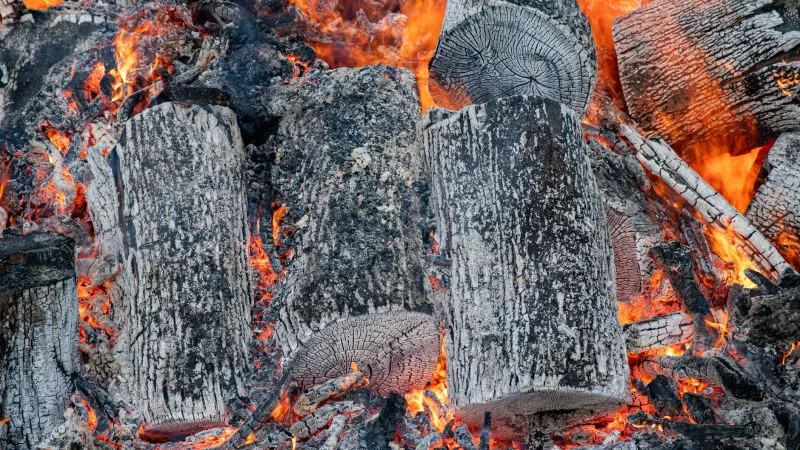
At 6.04am on 8 November 2026, the park is still dark enough for the streetlights to be doing their best. I am holding a flask of tea and a camera set to 3200 ISO, standing beside a bin that has seen things. The bonfire is a grey mound. The guy is not.
Three nights ago, this was the centre of the universe: a pyre, a crowd, a catering van selling burgers at a speed that suggested a captive market. This morning it is a crime scene with no crime, unless you count the scattering of fireworks boxes across the rec. The week after 5 November is when Britain's accidental sculptures go on show, and almost nobody turns up.
The Guy Who Didn't Make It Home
The first effigy I find is propped against a bench. He has lost an arm, gained a damp hoodie and is wearing a smile that could charitably be described as optimistic. A school tie flaps from his neck. His head is a plastic mask with one eye. He looks like a middle manager who has had a very long weekend.
This is the bit of Bonfire Night nobody photographs: the guy after the guy. On the night itself he is a silhouette against the flames, cheered and then forgotten. By dawn on 6, 7 or 8 November he is a found object, a scarecrow made by a whole street. You can read the community in his costume: the donated shirt, the bin bag stuffing, the eyebrows drawn on by someone who was probably eight years old and very serious about eyebrows.
A Fairy Light Crime Scene
Fifty yards on, the tarmac tells a story in melted plastic. A fairy light has fused itself to a fence post in a way that looks almost deliberate, like a tiny neon eel. There are sparkler wires, a glove, three trampled fireworks boxes and a puddle full of glitter. A fox has walked through the glitter. The fox has not left a review.
The strange beauty is in the scale. On the night, everything is noise and sulphur and hot dogs. At dawn, the debris is quiet. A melted light becomes a small amber sculpture. A half-burned box becomes a printed relic. The council sweepers arrive at eight. By nine, the whole exhibition is in a bin lorry.
The Fairground at 6.15
The fairground on the edge of town is better still. The generators are off. The waltzer sits under a grey sky with rain in its seats, looking like a jewellery box left open in a storm. A security guard in a high-vis jacket eats a bacon roll and pretends not to see me. The candyfloss stall has a sign that says 'Fresh Today'. It is not fresh today.
What I love about these dawn visits is the honesty. There is no music, no queue, no queue's cousin, the person who stands too close. The rides are just machinery. The prizes are just plush toys in shrink wrap. The whole thing has the air of a party that ended exactly when it should have, leaving the furniture slightly askew.
Why Dawn Wins
Photographers talk about the golden hour, but the week after Bonfire Night has its own grey hour: low cloud, wet tarmac, a light that makes even a trampled box look elegiac. The trick is to get there before the sweepers, before the dog walkers, before the weather turns the ash into slurry. You are not documenting an event. You are documenting the pause after an event.
And there is a practical joy to it. Parks, beaches and fairgrounds at first light are free, open and almost empty. The only competition is a herring gull with a chip. The only heckler is a bin. You can stand in the middle of a municipal recreation ground and feel like the last person on earth, if the last person on earth had a thermos and a mild obsession with melted fairy lights.
These scenes are ephemeral by design. They are made by communities, unmade by councils, and washed away by the first proper rain. If you want to see them, set an alarm. If you want to photograph them, set two. By the time the rest of the country is eating breakfast, the guy will be in a skip and the waltzer will be on a trailer heading to the next town. Catch them while they are still cinder and glitter.