Tiny High Streets, Enormous Charm: A Photo Tour of Britain's Model Villages
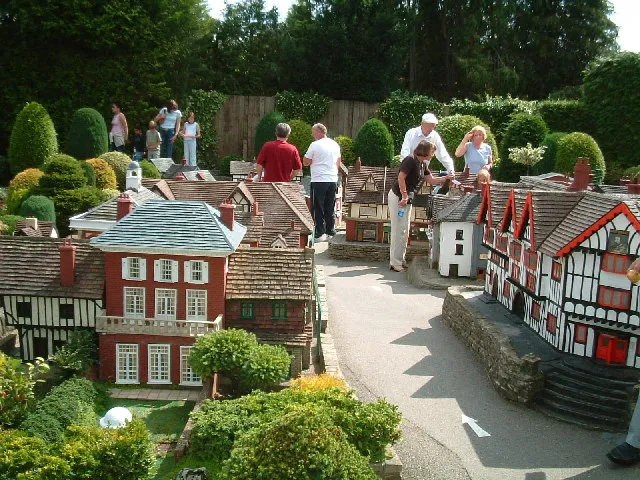
Photo: Ray Stanton, CC BY-SA 2.0, via Wikimedia Commons
A model village is Britain at one-third scale and full civic confidence. There is a pub, a church, a war memorial and a bin, all perfectly proportioned and absolutely free of litter. Nobody is blocking the pavement with a delivery van. Nobody is shouting at a parking meter. It is the high street we were promised, if only we could shrink ourselves and stop knocking over the little lampposts.
Owl's Pics has been touring the UK's miniature settlements, from famous model towns to eccentric garden-scale creations. The aim was not to be sensible. The aim was to crouch very low, photograph a tiny bakery, and feel briefly enormous and ridiculous. Mission accomplished.
Why Miniature Britain Photographs So Well
Model villages are Britain with the awkward bits sanded off and the chimney pots left in. The scale does something wonderful to the brain. A wheelie bin becomes a thimble. A terrace becomes a row of dollhouses. A duck pond becomes a whole afternoon.
They also allow for a very British kind of humour. The tiny pub has a tiny sign. The tiny church has tiny gravestones. The tiny railway has a tiny level crossing, and if you wait long enough, a tiny train will come and make you gasp. It is not sophisticated. It is deeply satisfying.
The Big Four (Plus Garden Gems)
Bekonscot in Beaconsfield is the grand old dame of the model village world, going since 1929. It has a castle, a railway and a level of civic detail that suggests the model residents pay their model council tax on time.
Babbacombe Model Village in Torquay is cliffside and slightly theatrical, with a dragon, a lot of tiny people and views that make the whole thing look like a postcard that has been left in the sun.
Wimborne Model Town offers a beautifully observed high street, the sort of place where every shopfront feels like it has a story and every awning is the correct shade of faded.
Bourton-on-the-Water Model Village is a miniature version of the village that contains it, which is either charming or a glitch in the matrix. We are going with charming.
Then there are the garden-scale creations: back-garden railways, shed-top towns and one garden we heard about with a fully operational tiny fish and chip shop. Britain is full of people quietly building a better high street at the bottom of the lawn.
How to Shoot a Tiny High Street Without Looking Like a Giant
First, get low. Not a gentle crouch: get your chin near the pavement. The best miniature photographs are taken at the eye level of the tiny residents, not from the lofty perspective of a visiting insurance salesman.
Second, think about depth of field. A small aperture such as f/11 or f/16 will keep more of the scene sharp, if the light allows. A tripod or beanbag helps. Overcast days are your friend, because model villages are full of shiny surfaces and harsh sun turns every tiny window into a tiny mirror.
Third, avoid the background. Real visitors, real fences and real bins can ruin the illusion. Wait for the school group to move. Frame tightly. Look for signs, doorways and pigeons. A pigeon in a model village is either a giant monster or a delightful scale joke. Either way, photograph it.
Finally, do not step over the little fence, even if the tiny pub garden is begging you. The best pictures come from patience, not from lying across a miniature roundabout.
The Most Photogenic Little Landmarks, Ranked
-
The impossibly steep terrace. Every model village has one row of houses that appears to have been built by a surveyor with a grudge. Photograph it from below and it looks like a alpine resort for mice.
-
The tiny pub sign. A hanging sign the size of a stamp, swinging in a breeze that could destroy it. Wait for the light to catch the lettering. Try not to think about the price of a tiny pint.
-
The miniature railway level crossing. This is the starter pistol of model village photography. Wait for the train. It will come. It always comes, eventually, like a bus.
-
The wee church and its perfect gravestones. Morbid? Yes. Photogenic? Extremely. The miniature yew hedge is usually a triumph.
-
The model high street shopfronts. Bakery, butcher, haberdasher, estate agent. All closed, all perfect. The tiny estate agent window is a particular joy.
-
The duck pond, preferably with a real duck. The scale confusion is the joke. A real duck among model houses looks like a feathered kaiju. Photograph it gently and do not offer it a tiny bread roll.
Honourable mention goes to the civic bin. Every model village has one, and it is always immaculate. Britain in miniature is still Britain, but the bins are finally behaving.
A Note on Scale, Signage and Not Being a Menace
Model villages are not photo studios. They are small businesses, charities and labour-of-love attractions. Ask before setting up a tripod. Do not move the figures. Do not pick up the tiny car. Do not attempt to post a letter in the tiny postbox, however satisfying it might be.
And remember that the pleasure of these places is not just visual. It is the sound of a child saying 'look at the tiny chip shop' and an adult saying 'I wonder if they do tiny mushy peas'. Britain looks better at one-twelfth scale. The high street is still closed, but at least it fits in your viewfinder.