The Bin Is Watching: Britain’s Accidental Owls and the Art of Being Stared At by Street Furniture
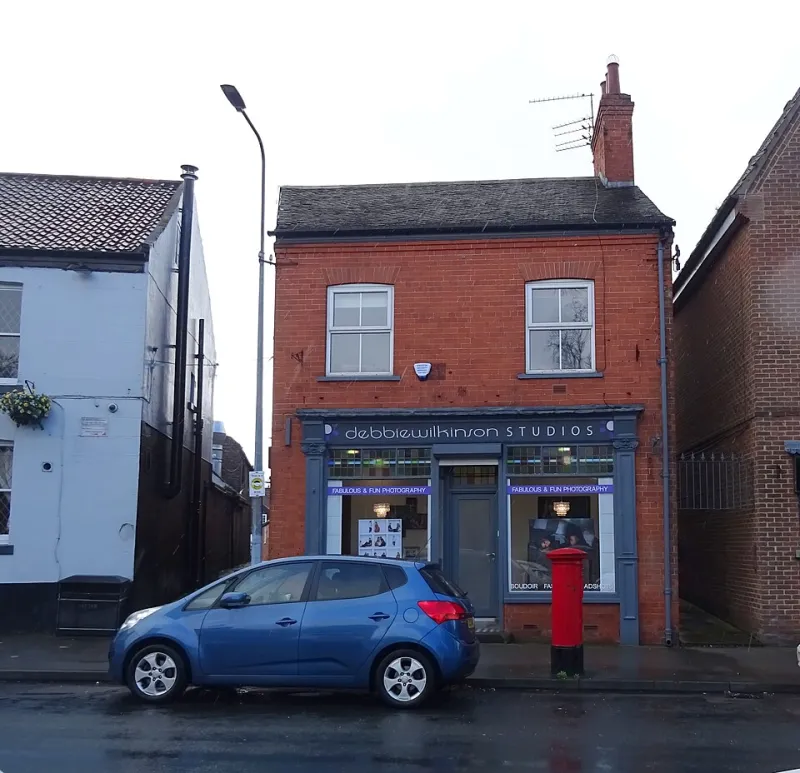
Photo: JThomas , CC BY-SA 2.0, via Wikimedia Commons
There is a particular moment, usually on a damp Saturday, when a wheelie bin stops being a wheelie bin and starts being an owl. Two round reflectors catch the light. A dent in the lid suggests a beak. The whole thing seems to tilt its head, slightly disappointed in you. You have not lost your mind. You have simply met an accidental owl.
Britain is unusually well stocked with them. Our streets are a rummage sale of knobs, bolts, shadows and municipal curves, and our brains are relentless pattern-spotters. Give us two circles above a triangle and we will invent a bird of prey. This is pareidolia — the everyday hallucination of faces in things — and it has quietly turned our bollards, tree knots and cast-iron drain covers into a nation of secret watchers.
For this photo essay, Owl’s Pics went looking for them. Not real owls. Real owls are magnificent, but they have better schedules and considerably less interest in posing beside a parking meter. We wanted the other kind: the ones made of hinges, bark, tea cosies and shadows. The ones that stare back.
First, a Confession About Bollards
I have photographed many bollards. Too many, according to the camera roll. But in my defence, some of them are clearly owls. A good street owl needs only three things: two eyes, a beak-ish shadow and a sense of quiet judgement. The judgement is essential. A bin that merely looks surprised is not yet an owl. A bin that looks as if it has read your shopping list and found it wanting — that is an owl.
The best examples tend to appear in ordinary places: the edge of a car park, the mouth of an alley, the bit of pavement where a dropped chip has attracted a pigeon and a small crowd of gulls. Accidental owls are not glamorous. They are municipal. They are the visual equivalent of a raised eyebrow from a neighbour.
Field Notes: One Damp Weekend, Three Streets, Two Stares
Saturday began badly. I set out to shoot drain covers and immediately got distracted by a tree knot in a park in south London. It had the face of a tawny owl that had seen some things and was not impressed by any of them. Bark is brilliant for this. A knot here, a split there, and suddenly you are being watched by a piece of woodland that has stood in the same spot since the reign of a monarch you learned about in school and have since forgotten.
By lunchtime I had found a bollard with two reflective bands that looked like spectacles, a paving slab with a pair of stains that resembled a barn owl mid-blink, and a wheelie bin whose lid hinges had arranged themselves into an expression of mild disdain. The bin was the clear winner. It had presence. It had attitude. It also had a bin bag sticking out of the top, which rather ruined the mystery but improved the comedy.
Sunday was quieter. I photographed a tea cosy submitted by a reader in Shropshire. It had two buttons for eyes and a folded seam that gave it the look of a small, furious owl guarding a pot of Earl Grey. It is not street furniture. It is not even outdoors. But pareidolia does not respect boundaries, and neither do tea cosies.
The Drain Cover That Would Not Blink
The star of the weekend was a cast-iron drain cover. Two bolt holes for eyes. A central slot for a beak. A rim of rust that gave it the weary expression of a bird that has spent forty years listening to traffic and has decided not to comment. I crouched beside it while commuters stepped around me with the broad-minded tolerance of people who have seen worse on a Saturday.
The trick with drain covers is angle. Get low and the eyes become rounder. Get too low and you look like you are proposing to the pavement. Get the light from the side and the beak-shadow sharpens. I took eleven photographs. Ten were of wet tarmac. The eleventh was a portrait of a spectacled owl made of iron and drainage.
It is still there, presumably. Still watching. Still not blinking. Very professional.
A Very Short Field Guide to British Street Owls
- The tree-knot tawny: Found in parks and old cemeteries. Eyes are knots; beak is a split in the bark. Stare suggests it knows what you did in 2019 and is prepared to bring it up at dinner.
- The bollard barn owl: Common near car parks and retail parks. Reflective strips form the eyes. Beak is pure shadow. Often appears to be guarding a dropped kebab.
- The drain-cover spectacled owl: Low-angle specialist. Cast iron, bolt-hole eyes, slot beak. Best photographed before rush hour, when it is still pretending to be infrastructure.
- The tea-cosy screech owl: Domestic. Kitchen-based. May contain a teapot. Stare is intensified by the presence of a biscuit tin just out of reach.
- The wheelie-bin eagle owl: Suburban. Bin-day only. Lid hinges form the face. Smell is not part of the visual composition, thankfully.
Reader Submissions: The Glove, the Sponge and the Compost Bag
We asked readers to send their own accidental owls, and Britain delivered with the usual splendid lack of restraint. One person sent a pair of cycling gloves drying on a hedge; the thumbs had curled into a perfect beak. Another sent a compost bag whose printed leaves had creased into two eyes and a frown. A third sent a parking meter in Leeds that looked unsettlingly like a short-sighted eagle.
My favourite came from a reader in Norfolk: a sponge on a draining board, two sudsy holes for eyes, a notch for a beak. It looked less like an owl and more like a cheese grater with opinions. Reader submissions are the lifeblood of this sort of thing. They prove that accidental owls are not a niche hobby for people with too much time and a camera. They are a national condition.
When Not to See an Owl
There are rules. Pareidolia etiquette exists, even if nobody has written it down until now. Do not photograph strangers’ windows in search of face-like reflections. Do not block a pavement to crouch at a drain cover while a pram convoy approaches. Do not tell someone their car looks like an owl if it is simply a car with two headlights; that is not pareidolia, that is a car.
And if the owl flies away, it was a real owl. Apologise and back off. You have just tried to photograph a living creature as if it were a wonky bracket.
How to Shoot Your Own Accidental Owl
Start with the eyes. Find two circles, holes, knots or reflections that sit at roughly the same height. Look for a beak-shaped shadow between them. Then move until the object stops looking like a bin and starts looking like a bird. Side light helps. So does a bit of rain, which adds shine and drama to otherwise humble street furniture.
Fill the frame, but leave enough context to show what the thing actually is. A drain cover is funnier when you can see the pavement. A tea cosy is funnier when you can see the kettle. And do not over-edit. Let the object remain an object. The magic is that it is still a bollard, a bin or a bag of compost, and yet it is also, unmistakably, watching you.
The Pleasure of Being Watched by Nothing
There is something oddly comforting about Britain’s accidental owls. They are free, abundant and entirely uninterested in us. They do not need feeding. They do not migrate. They simply sit there, made of iron and bark and household clutter, giving the street a little extra side-eye. In a country that specialises in quietly eccentric details, they might be our most democratic form of public art.
So keep looking. The next one might be a manhole cover, a door handle, a bag of bird seed or a particularly tired jacket on a hook. If it has two eyes and a beak-shaped shadow, it counts. Send it to Owl’s Pics. We will look back.